12 Common Measuring Tools Used For Cooking
Whether you’re a new cook or an experienced professional, the right measuring tools can make or break a dish.
If you’ve ever rolled out a pie crust with a wine bottle because that’s what you had, you know that there are specific tools that are critical to certain situations.
Dry Measuring Cups
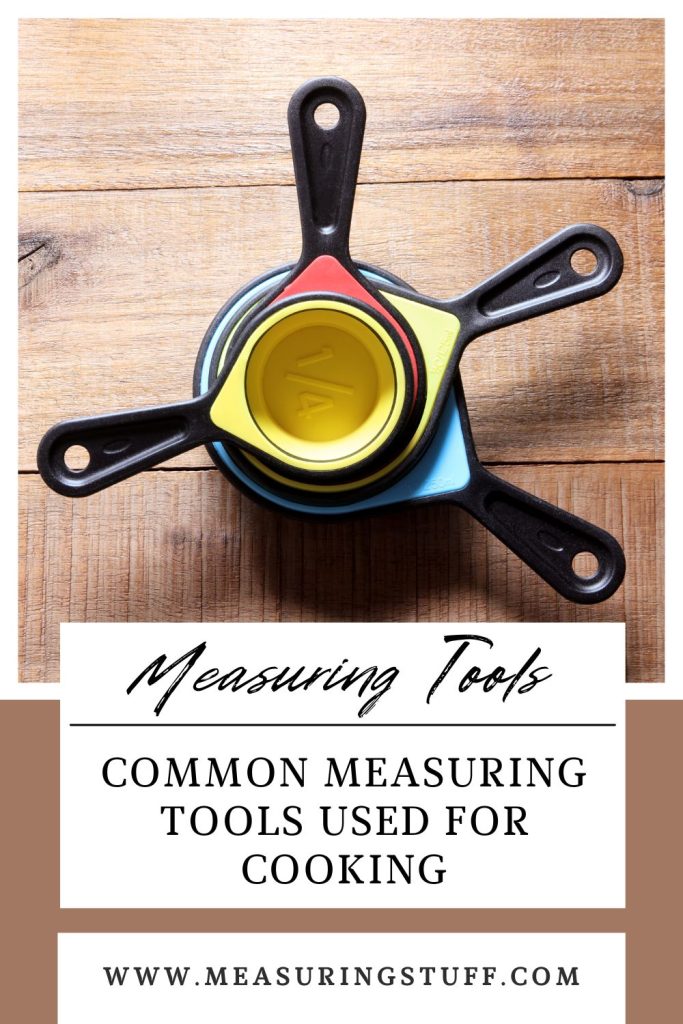
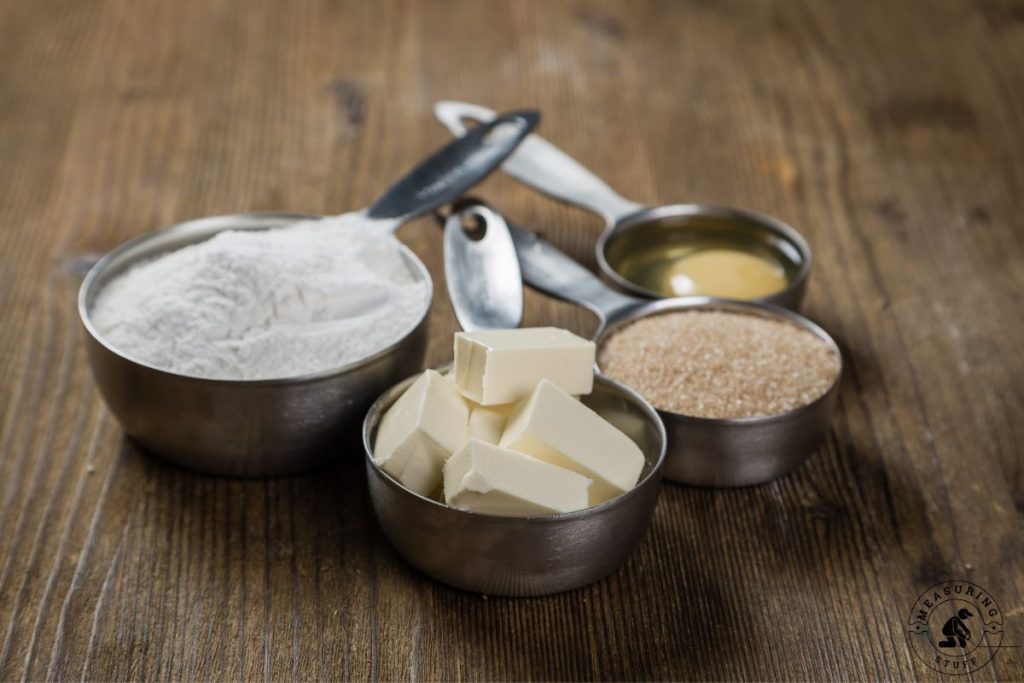
Dry measuring cups can be purchased in silicon, plastic, or stainless steel. When you fill a dry measuring cup with flour or cornmeal, you can smooth the top with a straight edge and be certain it is correct.
For cooks who like to use their measuring cups as a scoop as well as a measuring device, look for a heavy-duty stainless set with handles that don’t flex.
Once handles have been bent, they’re never as sturdy as before.
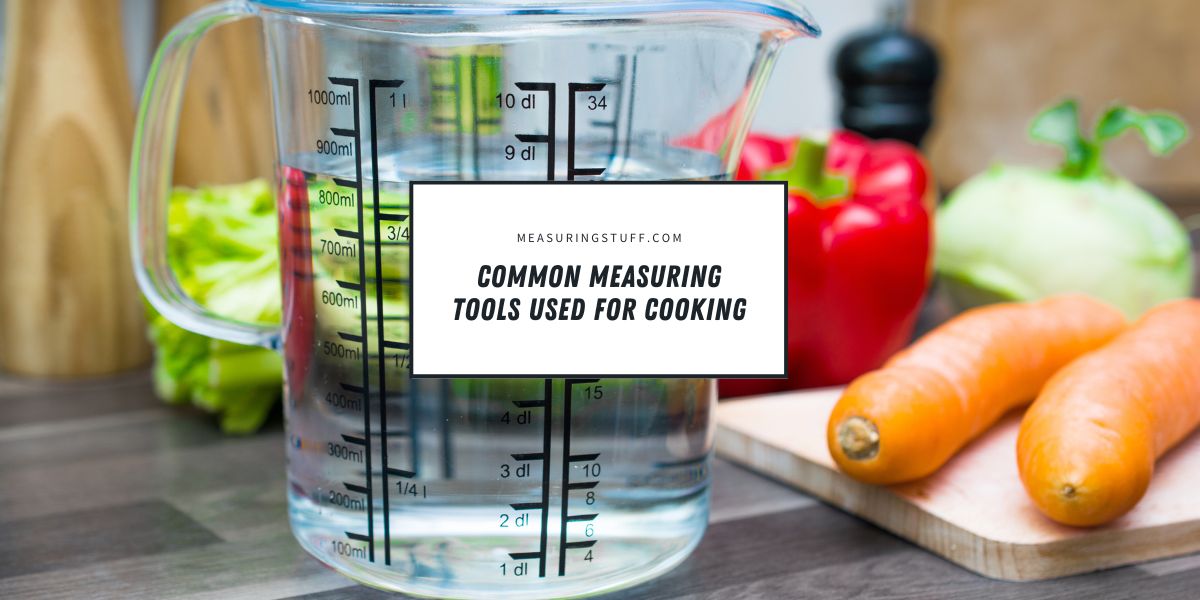
Liquid Measuring Cups
Liquid measuring cups are generally clear or frosted and made of glass or plastic. While a dry measuring cup is accurate when leveled at the top, a liquid measuring cup gives you a bit of grace.
It also has a spout for easy pouring.
Plastic measuring cups are generally not a good investment; they tend to become more opaque over time and don’t respond well to being left too close to a hot cooking surface.
It may be best to start your kitchen inventory with a 2-cup glass measuring cup and you can move up from there.
Check out: Measuring gifts for cooking/kitchen
Adjustable Measuring Cups
Adjustable measuring cups are among those “I hardly use this but when I need it I love it,” sort of tools.
They are built as a marked sleeve around a plunger. Move the plunger down and set the proper measurement for your ingredient, then fill the void.
To get the ingredient out, depress the plunger. These tools are ideal for sticky stuff, such as
- peanut butter
- shortening
- molasses
- honey and corn syrup
If it’s going to be a sticky mess to get out of a standard measuring cup, use the adjustable. Take care; when the measuring sleeve is extended and it’s full of something sticky, it will be top-heavy.
No products found.
Measuring Spoons
Measuring spoons can be found in plastic and in stainless steel. Spend the money and get a stainless steel set with a connecting ring to keep all 4 spoons together.
Once they’re split apart they have a tendency to end up in the garbage disposal and they are fussy to fish out.
No products found.
Salad Dressing Shakers/Plungers
A salad dressing shaker with a plunger looks a bit like a French press. They’re generally made of plastic.
On the outside, you should see markings for vinegar, oil, and other ingredients; many of these tools come with recipes printed on the side.
Once the ingredients are in the cup, plunge it up and down to mix the dressing. Shake at your own risk; some of these can be hard to seal up.
Do take care to wash the exterior cup by hand. They may say that they are dishwasher safe, but if they are scored or etched in the dishwasher they’re hard to read and difficult to see into as you add ingredients.
Washing them by hand will keep the plastic cup clear.
Check out more measuring tools in the Measuring Stuff shop!
Mixing and Food Processing Bowls
A selection of plastic mixing bowls will not cost a great deal. If you can nest them in the cabinet, they also don’t take up a lot of room.
If a recipe calls for dry ingredients to be pre-mixed before they’re added to egg and oil, multiple mixing bowls are pretty handy.
Not all food processing bowls come with measurements on the side, but if you can, get one.
Chopping up bulky vegetables into a measurable amount of small chunks will be much easier if you can rely on the markings on the side of the bowl.
Platform Scales
A platform scale is a digital tool that you can use for many dry ingredients, particularly flour that needs to be sifted. Set the empty measuring cup on the scale and zero it out.
Next, add dry ingredients to the cup until you reach the right weight. If you’re baking something that calls for sifted flour, measuring it after sifting can be confusing.
By using the weight, you can get a more accurate amount.
No products found.
Hanging Scales
Hanging scales work well for larger items. You’ve probably seen these at grocery stores in the produce section.
A small digital scale is handy, but it’s hard to read when you set a roasting pan full of raw wild turkey on it.
Admittedly, not all of us are handling wild game on a regular basis.
However, these scales can also come in handy when you come home from picking apples or peaches at a local orchard or bring in the carrots from your own garden.
Spaghetti Gauge
A spaghetti gauge is a simple, nifty tool that lets you choose how much spaghetti to cook by the population at the dinner table. Just fill up the hole that corresponds to the number of people dining with you.
Candy Thermometers
Candy thermometers are highly specific but incredibly useful. If you’ve ever had to junk a saucepan because the syrup for your caramel popcorn stayed on the burner a bit too long, you know what a mess and a stink burned sugar can cause.
To avoid this, get a candy thermometer. Practice handling it around a pan of hot water on the stovetop to get a feel for the weight and the grip.
Many homemade candies, such as divinity, are incredibly sticky in liquid form and can be dangerous for a beginner.
Meat Thermometers
A meat thermometer is a thermometer that is attached to the end of a probe. To check the center of a large piece of meat, you poke the probe into the flesh.
You can use them while grilling and baking meat in the oven.
Do make sure that you read all the instructions before using. Leaving them in meat on the grill with the lid shut can damage them and make their information useless.
No products found.
Oven Thermometers
An oven thermometer checks the temperature of your oven. Of course, if you set the temperature of your own, you shouldn’t need an oven thermometer.
However, if you’ve ever moved into an apartment and burned a batch of brownies, testing different areas of the oven with an oven thermometer can let you know where the hot spots are.